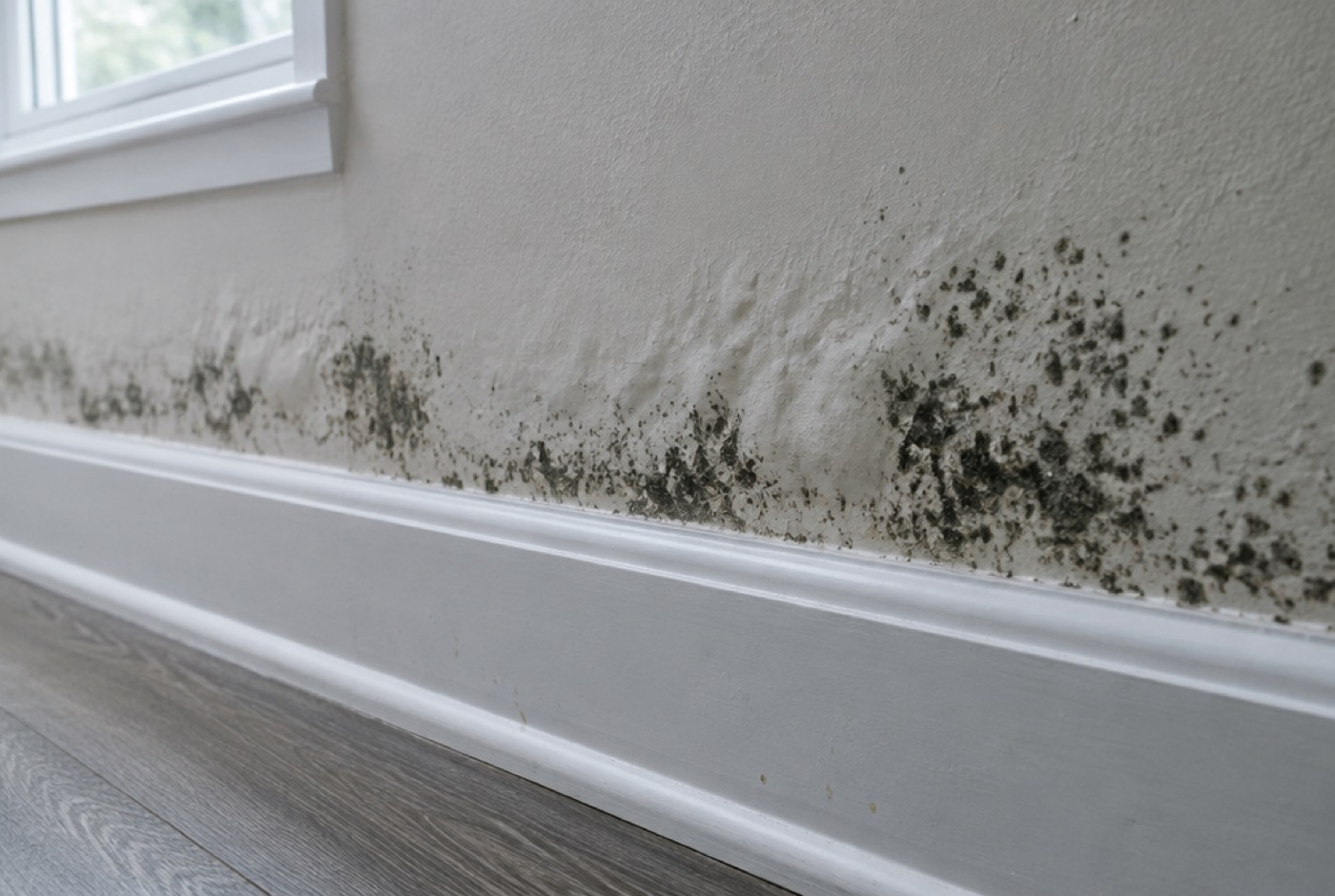
Wet drywall, a ceiling that is still dripping, a smell that was not there last week. AEVO Pro is a veteran-owned Florida water mitigation company, in business since 1977, with drying crews and a mold remediator in the Panhandle now. We extract, dry, contain and document, and the claim paperwork comes with it.
Who we are
AEVO Pro is a veteran-owned, licensed and insured water mitigation and environmental services contractor. Water intrusion, structural drying, mold remediation and decontamination are what we have done for residential and commercial clients across Florida, Georgia, the Carolinas, Louisiana and Texas since 1977. Every inspection is free, every estimate is itemized, and every moisture reading is logged for your claim.
Extraction, air movers, commercial dehumidifiers and moisture mapping. We dry the structure, not just the surface, and we prove it with meter readings.
Containment under negative air, removal, HEPA cleaning and clearance. On the same truck as the drying crew, so mold is caught in the same visit.
Storm water is not clean water. Antimicrobial treatment and odor control for everything the water touched, so the house is safe to live in, not just dry.
What we do
Standing water out, then air movers and dehumidifiers on walls, floors and insulation until the meter says dry. Daily readings logged.
Containment, removal of what cannot be saved, HEPA cleaning of what can, and a clearance check before anything gets closed up.
Soaked drywall, insulation, baseboard and flooring removed cleanly at the right height, bagged and documented for the claim.
Where the water came in, how far it traveled inside the walls, and what it soaked. Measured, not guessed.
Antimicrobial treatment for storm water contamination and the musty smell that comes with it.
If the water is still coming in from above, the roofing crew tarps it on the same visit. Storm damage roof repair →
What the storm left behind

Most of the water in Panhandle houses right now did not come from a flood. It came through lifted shingles, blown-in windows and torn siding, then down into the attic insulation and the wall cavities. The surface of the drywall dries in a day. The insulation behind it and the bottom plate under it can stay wet for weeks.
That hidden moisture is where mold starts, usually on the back side of the drywall where nobody sees it until the smell shows up or the paint bubbles. In Gulf Coast humidity, with the power out and no air conditioning, it starts faster.
The free inspection puts a moisture meter on every wall and ceiling the water could have reached. If it reads dry, we tell you so and leave. If it does not, you know exactly what needs to come out, what can be dried in place, and what the claim should cover.
How it works
Four steps, one crew, one moisture log from the first visit to the clearance check.
You tell us what you are seeing and smelling. We tell you what to do in the next hour and schedule the inspection.
Moisture readings on every wall, ceiling and floor the water could have reached. Photos and an itemized scope, written the way an insurer reads it.
Water out, equipment in, wet materials removed, mold contained under negative air if it has started. Daily readings until dry.
Clearance check on remediated areas, final moisture log, and the full file for your claim. Deadline for notice on this storm: October 9, 2027.
Where the crews are working
Milton, Pace, Gulf Breeze, Navarre, Jay and the communities north of I-10 that took the heaviest debris.
Destin, Fort Walton Beach, Niceville, Crestview, Mary Esther and Shalimar, from the landfall point inland.
Pensacola, Pensacola Beach, Cantonment, Perdido Key and the neighborhoods that saw the strongest gusts.
Water and mold questions people are asking this week
Water that came in through wind-damaged roofing, siding or windows is normally covered under the windstorm part of a standard Florida policy as part of the same loss, subject to your hurricane deductible. Rising floodwater from outside is a separate flood policy, which is a different conversation.
The U.S. EPA says mold can begin growing on wet materials within 24 to 48 hours. In Gulf Coast humidity, wet drywall and insulation that is not actively dried is a mold problem within days, not weeks.
Fans move air across the surface; they do not pull water out of drywall, insulation or the subfloor, and opening windows in Panhandle humidity adds moisture to the house. Structural drying uses air movers and commercial dehumidifiers together and checks progress with a moisture meter until the materials read dry, not just feel dry.
Containment of the affected area under negative air, removal of materials that cannot be cleaned, HEPA cleaning of what can, drying to stop regrowth, and a clearance check before the area is closed back up. Florida requires a licensed mold remediator for jobs over 10 square feet.
It depends on what got wet and how long it sat. We set equipment, take readings daily, and pull the equipment when the materials read dry, not on a fixed schedule. You see the readings.
Under Florida Statute 627.70132 you must give notice within one year of the date of loss, and for a hurricane that is the landfall date: October 9, 2026. So notice is due by October 9, 2027. A supplemental claim, if the first payment falls short, gets 18 months.
We are a Florida company, veteran-owned and operated since 1977, with crews staged in Milton and Destin for the length of this recovery. We are not from Milton, and we will not pretend to be. What we will do is show up when we say, measure everything, and leave you with a house that is actually dry.
Free water damage inspection
Milton, Destin, Pensacola and everywhere in between. Extraction, drying, mold, one crew.
Takes 30 seconds. A person calls you back, not a call center.
A real person answers, tells you what to do right now, and books a free water damage inspection in Milton, Destin or Pensacola.
Call (850) 407-3140