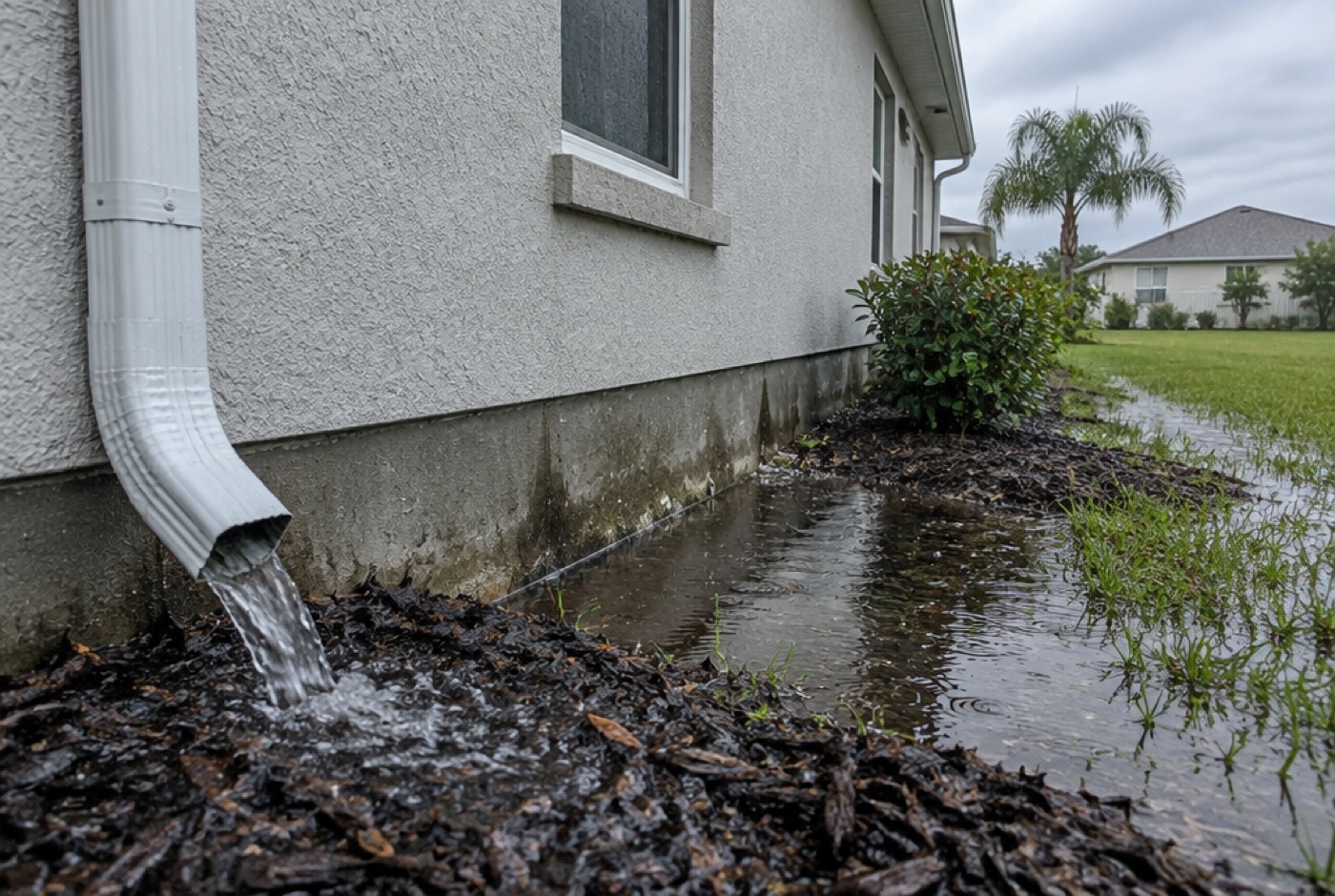
The roof is tarped and the house is drying. Now the part nobody advertises: the water that pooled against your foundation and sat under your floor. AEVO Pro is a veteran-owned Florida water mitigation company, in business since 1977, and foundation waterproofing and crawl space encapsulation are the work we started with.
Who we are
AEVO Pro is a veteran-owned, licensed and insured water mitigation and environmental services contractor. Keeping water out of foundations and crawl spaces is where this company started in 1977, and it is still the core of what we do for residential and commercial clients across Florida, Georgia, the Carolinas, Louisiana and Texas. Every inspection is free and every estimate is itemized.
Exterior membranes and coatings on stem walls and slab edges, so the water that pools against the house after every rain stays outside it.
Sealed vapor barrier over the ground, sealed vents, conditioned air. The floor system stays dry through Panhandle summers and the next storm.
Dehumidification, drainage correction where water is collecting against the house, and moisture readings that prove the fix worked.
What we do
Membranes and coatings on stem walls and slab edges where storm water pooled. Sealed at the line where the soil meets the house.
Heavy vapor barrier over the ground and up the walls, sealed vents and penetrations, and a dehumidifier sized for the space.
Wet insulation out, joists and subfloor dried and treated, mold remediated before the space is sealed. Water damage & mold →
Downspout extensions, grading and surface drainage so the next storm's water runs away from the foundation instead of into it.
Cracks and cold joints at the slab edge sealed so rising ground water and wind-driven rain stop finding their way under the floor.
Where water got under or against the house during the storm, how much is still there, and what it will take to keep it out next time.
What the storm left behind

A hurricane drops months of rain in a day. In the Panhandle that water does not run off; it soaks into sandy soil with a high water table and sits there. For a slab home that means water against the stem wall and under the slab edge. For a crawl space home it means a damp, dark space under the floor with no way to dry out.
Vented crawl spaces make it worse. All summer they pull humid outside air under the house, and after a storm saturates the ground they stay wet for months. The floor joists and subfloor absorb it. Inside, it shows up as a musty smell, cupping hardwood, soft spots, and humidity the air conditioner cannot keep up with.
None of this is an emergency the way a torn roof is, and we will tell you if it can wait. But it is the part of storm recovery that gets skipped, and it is the reason the same houses have mold problems a year later.
How it works
Four steps, one crew, and a moisture reading at the end that proves it worked.
You tell us what you are seeing, smelling, or worried about. We tell you honestly whether it is this week's problem or next month's.
Crawl space humidity, wood moisture, standing water, drainage paths and the foundation line. Photographed and logged.
An itemized estimate that separates what the storm did from what prevents the next one, so you know what to submit to insurance and what you are choosing to do.
Waterproofing, encapsulation or drainage work done to spec, then moisture readings taken again to show the space is dry and staying dry.
Where the crews are working
Milton, Pace, Gulf Breeze, Navarre, Jay and the communities north of I-10 that took the heaviest debris.
Destin, Fort Walton Beach, Niceville, Crestview, Mary Esther and Shalimar, from the landfall point inland.
Pensacola, Pensacola Beach, Cantonment, Perdido Key and the neighborhoods that saw the strongest gusts.
Foundation and crawl space questions
Usually it can wait a few weeks, and we will tell you so. After a hurricane the order is roof first, drying second, then the foundation and crawl space. The exception is a crawl space that is holding water or already smells musty; that is a mold problem in progress and goes to the front of the line.
Waterproofing and encapsulation are prevention, and most policies treat them as maintenance, not a covered loss. Storm damage to the foundation or structure itself may be covered. We separate the two on the estimate so you know what to submit and what you are paying for yourself.
Panhandle crawl spaces sit on sandy soil with a high water table in a humid climate. Vented crawl spaces pull humid outside air under the house all summer, and after a storm saturates the ground they stay damp for months. Encapsulation seals the ground and the vents, controls the humidity, and keeps the floor system dry.
Yes, and it is the most common thing we find after a hurricane. Wet soil under the house raises the humidity, the floor joists and subfloor absorb it, and mold follows. Inside the house it shows up as a musty smell and soft or cupping floors.
Most crawl space encapsulations are a few days. Exterior foundation waterproofing depends on how much of the perimeter needs it and what is in the way. The estimate gives you a schedule, and the moisture readings at the end tell you it is done.
We are a Florida company, veteran-owned and operated since 1977, with crews staged in Milton and Destin for the length of this recovery. We are not from Milton, and we will not pretend to be. What we will do is measure before we recommend, and tell you when something can wait.
Free foundation & crawl space inspection
Milton, Destin, Pensacola and everywhere in between. Measured first, recommended second.
Takes 30 seconds. A person calls you back, not a call center.
A real person answers, tells you whether it can wait, and books a free inspection in Milton, Destin or Pensacola.
Call (850) 407-3140